
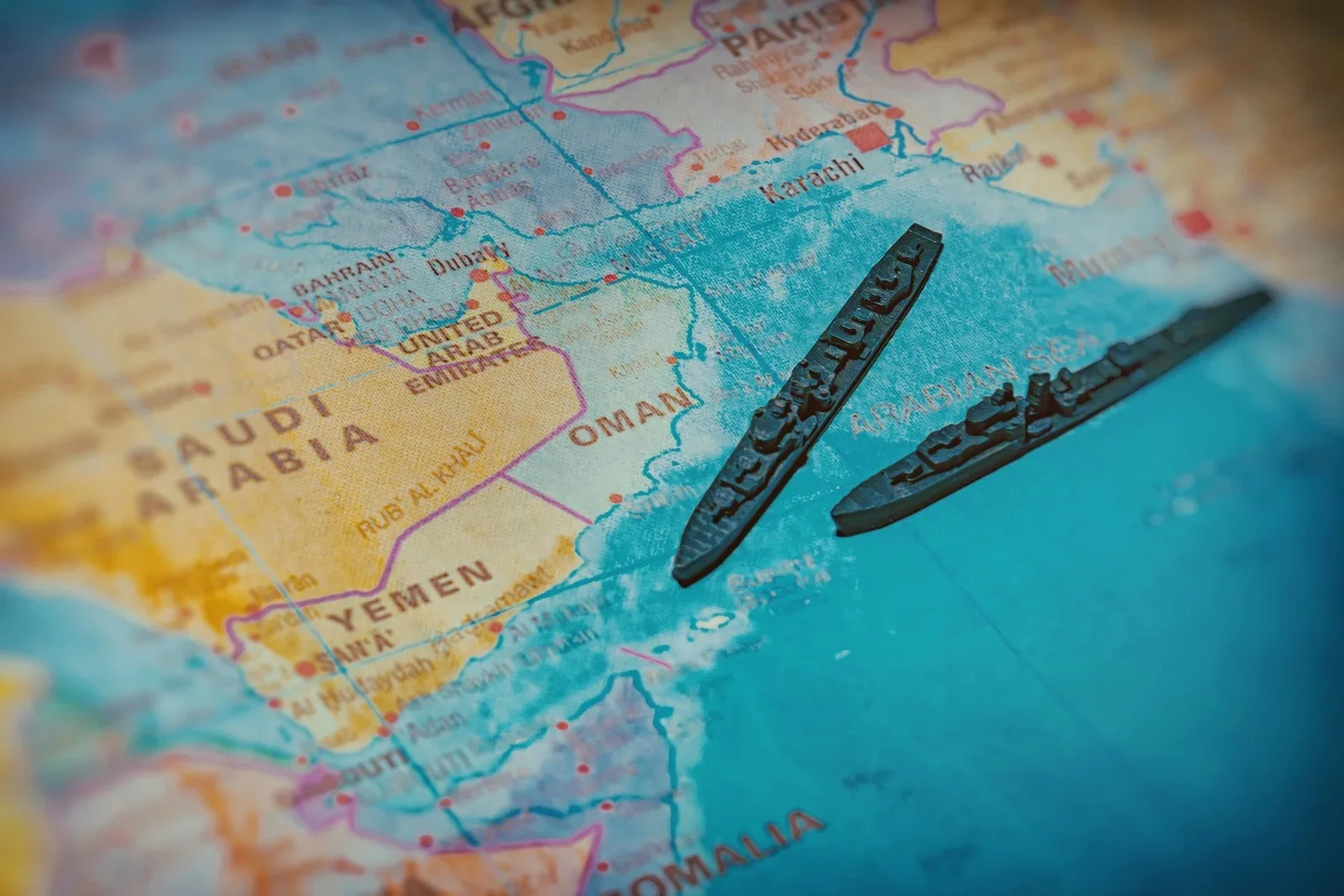
Trump Declares Sweeping Naval Blockade of Strait of Hormuz Over Iran's Nuclear Stance
US Implements Blockade Following Talks on Nuclear Ambitions
US President Donald Trump announced a sweeping naval blockade of the Strait of Hormuz on Sunday. The move follows repeated negotiations, which Trump held accountable to Iran's alleged unwillingness to abandon its nuclear ambitions.In a series of posts on Truth Social, Trump stated that talks had reached an impasse despite extensive mediation efforts. He asserted that negotiations "went well" and "most points were agreed to." However, he sharply criticized Tehran for remaining "unyielding as to the single most important issue."
The President emphasized this core disagreement, stating unequivocally, "IRAN IS UNWILLING TO GIVE UP ITS NUCLEAR AMBITIONS!"
Direct Allegations and Escalation of Maritime Tensions
Trump further accused Iran of breaching prior assurances regarding the safety of the Strait of Hormuz. He claimed the ongoing situation had caused "anxiety, dislocation, and pain to many people and Countries throughout the World."A major flashpoint cited was maritime safety, as Trump noted reports of mines. He wrote that "They say they put mines in the water," pointing out that this uncertainty had effectively deterred shipping operations.
Describing the overall situation as "WORLD EXTORTION," the US President declared that the United States would respond with immediate, forceful countermeasures.
Scope of the Blockade and Naval Operations
The declaration included an immediate mandate for the US Navy. Trump announced that US forces would "begin the process of BLOCKADING any and all Ships trying to enter, or leave, the Strait of Hormuz."The blockade measures extend to international waters as well. US forces would also "seek and interdict every vessel in International Waters that has paid a toll to Iran." He warned that "no one who pays an illegal toll will have safe passage on the high seas."
Furthermore, US naval units would commence destroying mines allegedly laid by Iran in the strategic waterway. Trump issued a stern warning to Iranian personnel: "Any Iranian who fires at us, or at peaceful vessels, will be BLOWN TO HELL!"
Duration and Context of the Blockade Measures
Trump confirmed the blockade would remain in effect until free navigation is fully restored. He characterized the current impasse as a direct violation of international norms governing crucial maritime trade routes.Despite the firm action, the US President acknowledged a future goal. He stated that "at some point, we will reach an 'ALL BEING ALLOWED TO GO IN, ALL BEING ALLOWED TO GO OUT' basis," while pinning the blame for the delay squarely on Iran.
The escalating tension was directly linked to the broader dispute over Tehran's nuclear program. Trump reiterated the administration's steadfast position: "IRAN WILL NEVER HAVE A NUCLEAR WEAPON!"
Background of Diplomatic Efforts in Pakistan
The declarations followed extensive high-level talks held in Islamabad. Trump reported that these negotiations, which reportedly spanned "close to 20 hours," involved senior Iranian representatives.Among the Iranian delegations mentioned were Mohammad-Bagher Ghalibaf, Abbas Araghchi, and Ali Bagheri. While Trump described the interactions between the various delegations as "very friendly and respectful," he stressed that the central dispute remained unresolved.
The process was overseen by Pakistan's leadership. Trump noted that he had been fully briefed by Vice-President JD Vance, Special Envoy Steve Witkoff, and his son-in-law Jared Kushner following the meeting, which was facilitated by Pakistan's leadership. In his remarks, he also praised Pakistan's leadership, naming Field Marshal Asim Munir and Prime Minister Shehbaz Sharif as "very extraordinary men."
Disclaimer: Due care and diligence have been taken in compiling and presenting news and market-related content. However, errors or omissions may arise despite such efforts.
The information provided is for general informational purposes only and does not constitute investment advice, a recommendation, or an offer to buy or sell any securities. Readers are advised to rely on their own assessment and judgment and consult appropriate financial advisers, if required, before taking any investment-related decisions.
Any views, opinions, or statements expressed, where applicable, are those of the respective analysts or experts and do not reflect the views of this website. The website has no association with such viewpoints and does not assume any responsibility for them.