
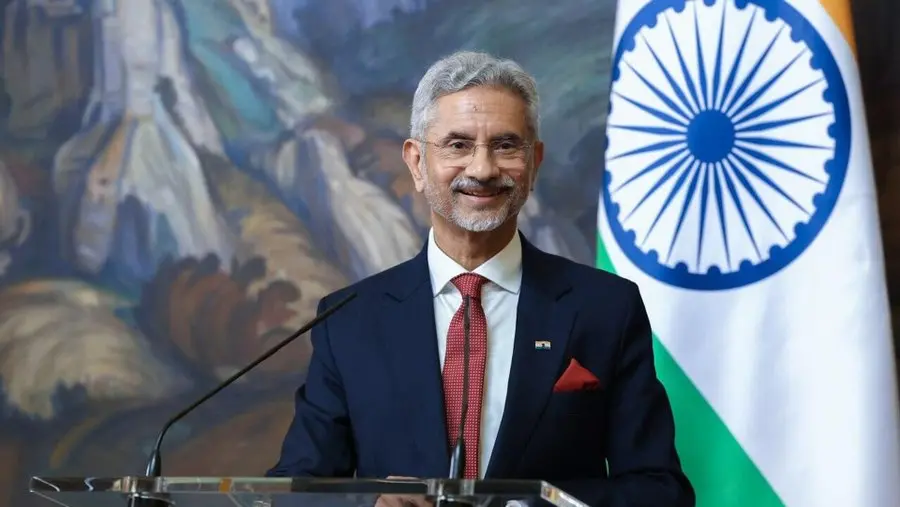
External Affairs Minister (EAM) S Jaishankar initiated crucial high-level talks this week, signaling India's deep engagement in managing instability across West Asia. The discussions focused acutely on geopolitical flashpoints and the critical need to safeguard global maritime trade.
The centerpiece of the diplomatic activity was a telephonic conversation held on Tuesday with Israel's Foreign Minister, Gideon Sa'ar. The exchange covered various dimensions of the tense West Asia situation, reflecting India’s continuous focus on regional stability.
Addressing Nuclear Concerns and Freedom of Navigation
During the call, FM Sa'ar stressed the importance of the United States' international stance regarding Iran's nuclear program. He specifically mentioned that global consensus must maintain conditions that prevent Iran from obtaining nuclear weapons.He reinforced that the international community relies on clear guidelines, particularly the removal of enriched material from Iran and strict no-enrichment policies.
Sa'ar further highlighted the immediate economic risks posed by instability. He emphasized that Iran's actions that harm freedom of navigation and the global economy through economic terrorism in the Strait of Hormuz require decisive action.
Critical Role of the Strait of Hormuz in Global Commerce
The Strait of Hormuz is recognized as one of the world's most vital oil transit arteries. It links the Persian Gulf to the Gulf of Oman and the Arabian Sea.This narrow passage is indispensable to global energy supplies, carrying an estimated nearly a fifth of all global oil shipments. Any disruption poses an immediate and severe threat to international commodity markets and supply chains.
These high-level talks occurred amid regional tensions, particularly following failed negotiation efforts between US and Iranian officials, underscoring the volatility in the region.
Strengthening Diplomatic Ties Across the Gulf Region
The period of intense diplomatic activity shows India's proactive efforts to reassure partners and protect its diaspora. Before the Israel call, EAM Jaishankar spoke with Kuwait's Foreign Minister, Sheikh Jarrah Jaber Al-Ahmad Al-Sabah. That conversation focused on the regional situation and the ongoing well-being of the Indian community.Furthermore, EAM Jaishankar recently undertook a two-day official visit to the UAE, meeting key leaders. He called on UAE President Sheikh Mohamed bin Zayed Al Nahyan in Abu Dhabi, conveying Prime Minister Narendra Modi's greetings.
During the UAE meeting, Jaishankar expressed deep gratitude for the steps taken to ensure the welfare of the Indian community amidst the West Asia conflict. He also met with UAE Deputy Prime Minister and Foreign Minister Sheikh Abdullah bin Zayed Al Nahyan, discussing the evolving regional situation and its wider implications.
These engagements reaffirm India's commitment to maintaining strong bonds with regional partners while simultaneously working to secure the safety and welfare of its nationals residing across the Gulf nations.
Disclaimer: Due care and diligence have been taken in compiling and presenting news and market-related content. However, errors or omissions may arise despite such efforts.
The information provided is for general informational purposes only and does not constitute investment advice, a recommendation, or an offer to buy or sell any securities. Readers are advised to rely on their own assessment and judgment and consult appropriate financial advisers, if required, before taking any investment-related decisions.
Any views, opinions, or statements expressed, where applicable, are those of the respective analysts or experts and do not reflect the views of this website. The website has no association with such viewpoints and does not assume any responsibility for them.