
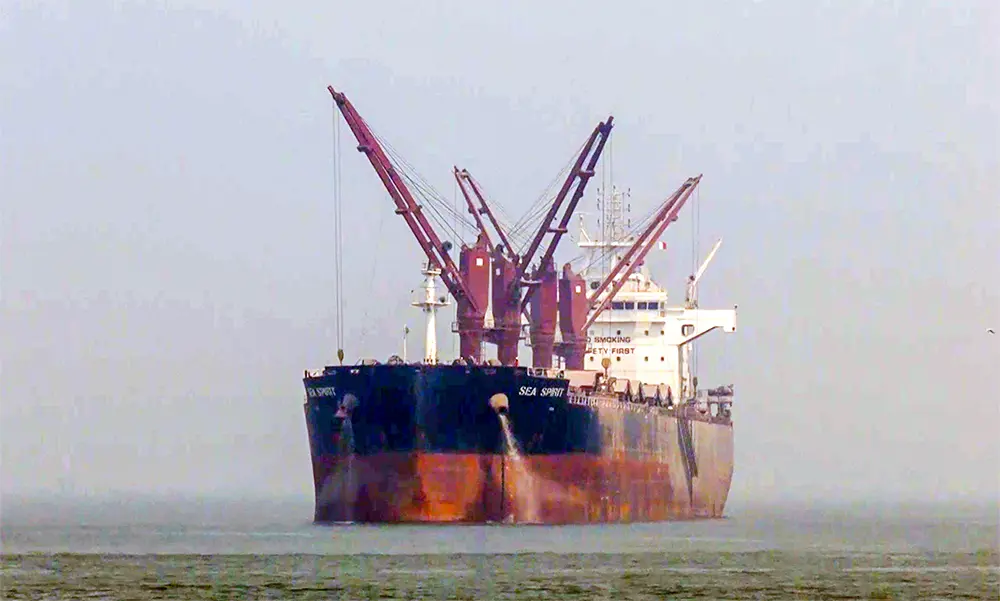
The global energy market is grappling with heightened volatility following reports of a potential US blockade targeting Iranian oil shipments. Analysts warn that the seizure of approximately two million barrels of Iranian oil per day could significantly restrict global supply, leading to a sharp climb in petroleum product prices.
The blockade, stemming from US military actions around Iranian ports, threatens to tighten the world's supply chain. Furthermore, the geopolitical strain could impact crucial maritime routes, raising concerns even for India's LPG supplies transiting the Strait of Hormuz.
Geopolitical Tensions and Supply Route Risks
The rising tensions are centered on the critical Strait of Hormuz. US President Donald Trump has indicated that the US will not allow any ships to pay a toll to Iran for passage through this strategic waterway.While India has not paid tolls for its recent LPG shipments through the Strait, the situation remains fluid and unconfirmed. Nomura, a tracking firm, highlighted that a complete blockade could impact not just Iranian oil but also LPG supplies to India.
Global Crude Price Dynamics and Market Reaction
In the wake of escalating conflicts, crude oil prices displayed sharp swings. After hitting $107 a barrel (bbl) on Monday, prices cooled below $100/bbl on Tuesday, fueled by renewed optimism surrounding potential US-Iran talks.However, the underlying risk remains high. Brent crude oil prices have surged 6.5 per cent in the last week, reaching nearly $98/bbl. Nomura warns that the failure of recent peace talks increases the likelihood of a high war risk premium being priced into oil prices.
Analyzing Supply Resilience and Export Volumes
Industry observers note that the effectiveness of relying on Strategic Petroleum Reserves may diminish as the conflict lingers, potentially fueling higher oil prices.Despite the instability, key suppliers remain active. Saudi Arabia reported its oil revenues rising 4 per cent year-on-year in March, while achieving a full oil flow capacity of 7mbpd on its East-West pipeline.
Experts anticipate continued high volumes from Saudi Arabia, projecting 5mbpd export volumes going forward, compared to 4.4mbpd recorded in March 2026. The UAE also demonstrated relative stability, reporting a minor 3 per cent year-over-year drop in oil revenues.
Financial Impact on Major Producers
Iran, according to estimates from Nomura, was the biggest beneficiary of the recent instability. Iran’s oil revenues surged by 36 per cent year-over-year in March 2026, reaching $5.7 billion.Overall, Nomura expects the oil supply situation to deteriorate further given President Trump’s threat to completely block the Strait of Hormuz for both inbound and outbound vessels.
Disclaimer: Due care and diligence have been taken in compiling and presenting news and market-related content. However, errors or omissions may arise despite such efforts.
The information provided is for general informational purposes only and does not constitute investment advice, a recommendation, or an offer to buy or sell any securities. Readers are advised to rely on their own assessment and judgment and consult appropriate financial advisers, if required, before taking any investment-related decisions.
Any views, opinions, or statements expressed, where applicable, are those of the respective analysts or experts and do not reflect the views of this website. The website has no association with such viewpoints and does not assume any responsibility for them.