
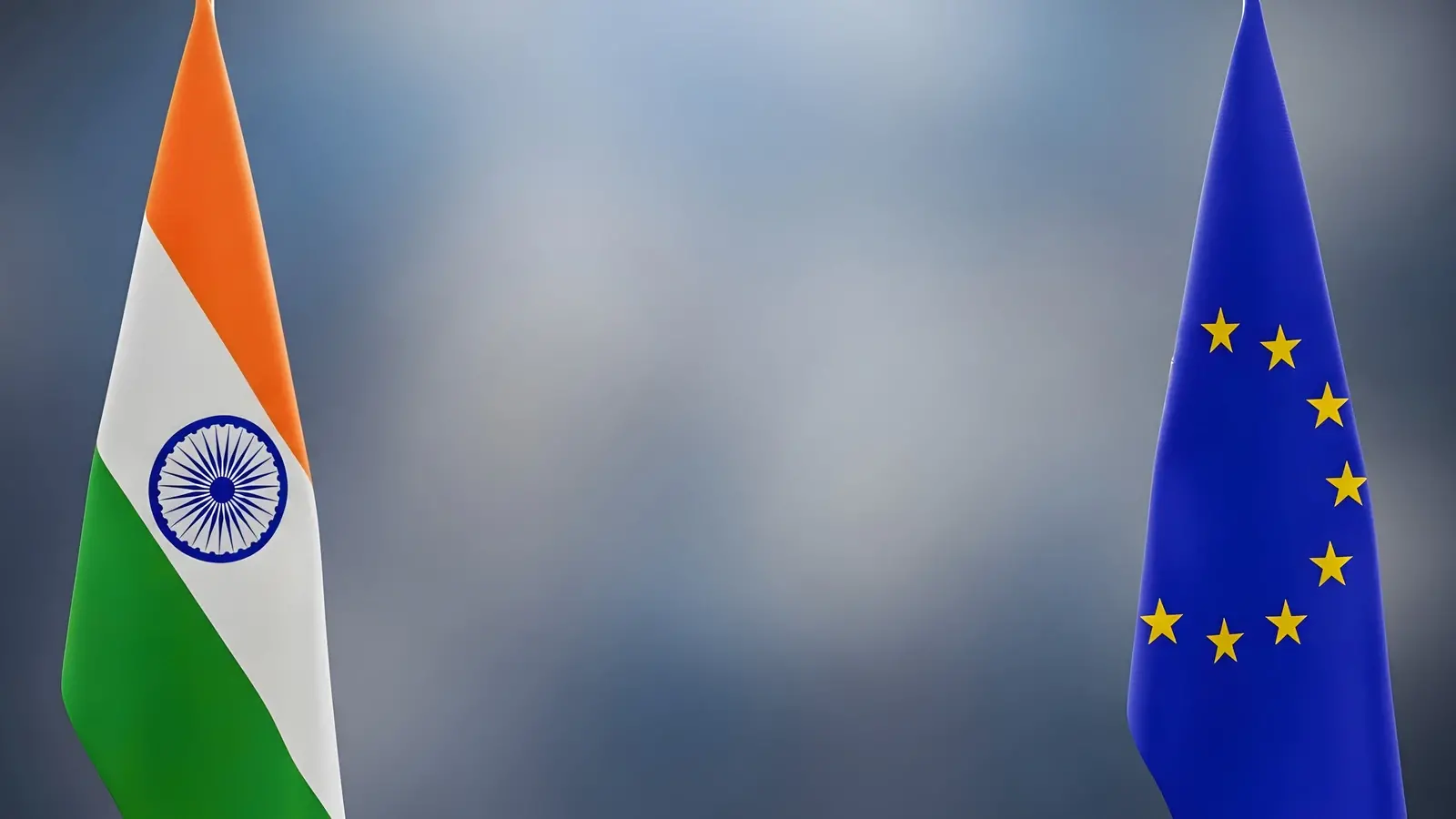
Deal Unlocks Duty Free Access for Indian Exports and Wider Market Entry for EU Goods
India and the European Union on Tuesday announced the conclusion of negotiations for a comprehensive free trade agreement, marking the end of discussions that stretched over more than two decades. The agreement is expected to reshape bilateral trade by offering significant tariff relief to Indian exporters while granting the EU phased and selective access to the Indian market.The agreement has been described as a landmark pact, creating a combined market of nearly two billion people and laying the foundation for a major expansion in goods and services trade between the two sides.
Market Access and Tariff Commitments by the European Union
Under the agreement, over 93 per cent of Indian goods will receive zero duty access into the EU, with automobiles and steel remaining outside the immediate liberalisation framework. For the remaining share of Indian exports, tariff reductions and quota based concessions will apply, particularly for automobiles.The EU will eliminate import duties on 90 per cent of Indian goods on the first day of the agreement’s entry into force, which is expected early next year. Duties on another three per cent of goods will be phased out over seven years. In value terms, concessions will cover 99.5 per cent of EU imports from India.
India’s Tariff Reductions for European Goods
India will provide duty free access to 93 per cent of EU goods over a ten year period. On the date of implementation, duties will be removed on goods representing 30 per cent of the total trade value. In addition, India will offer duty concessions and quota based reductions on 3.7 per cent of trade value, taking total concessions to 97.5 per cent of bilateral trade value for the EU.Indian Sectors Gaining Immediate Benefits
Several key Indian industries will gain duty free access to the EU market. These include textiles, apparel and clothing, marine products, chemicals, plastics, rubber, leather and footwear, base metals, gems and jewellery, furniture, toys, and sports goods. Currently, these sectors face EU duties ranging from zero to 26 per cent.Average EU tariffs stand at about 3.8 per cent and will fall to nearly zero under the agreement. In sectors where duties are relatively high, including marine products, chemicals, plastics and rubber, tariffs will be eliminated entirely. India exported goods worth about USD 35 billion from these sectors in 2024, with duties on USD 33.5 billion worth of exports set to be removed on the first day of implementation.
Automobiles and Electric Vehicles Under Quota Framework
Automobiles have been negotiated under a quota based duty concession system due to strong EU interest in the segment. Vehicles priced below Rs 25 lakh, including petrol, diesel and hybrid models, will not be exported from the EU to India under the agreement, with manufacturing expected to take place locally instead.India’s current import duties on automobiles range from 66 per cent to 125 per cent, and no out of quota duty reductions will be permitted. For electric vehicles, quota based concessions will begin from the fifth year of the agreement. Duty reductions will start at 30 to 35 per cent depending on the segment and will gradually decline over time.
Protected Sectors and Agriculture Provisions
India has excluded dairy products including cheese, soya meal and cereals from duty concessions. On the EU side, sugar, beef, meat and poultry sectors remain protected.India has secured quota based duty reductions for table grapes. The EU currently imports around USD 1.4 billion worth of table grapes annually, with India receiving duty free access for approximately USD 100 million or 85,000 tonnes.
For wines, India will reduce duties from 150 per cent to 20 per cent over seven years for high value wines. Wines priced below 2.5 euros will not receive any concessions.
Services, Mobility and Regulatory Chapters
On services, the EU has opened 144 sub sectors out of 155 to Indian service providers, while India has opened 102 sub sectors to the EU. The agreement also includes commitments related to student mobility and limited post study work opportunities.Beyond goods and services, the agreement covers digital trade, sanitary and phytosanitary measures, technical barriers to trade, and intellectual property rights. There are no chapters on energy, critical minerals or government procurement.
Trade Growth Outlook
Bilateral trade in goods currently stands at around USD 136 billion and is projected to cross USD 200 billion within three to four years of the agreement’s implementation. Trade in services, estimated at USD 80 to 85 billion, is expected to rise to about USD 125 billion over the same period.Disclaimer: Due care and diligence have been taken in compiling and presenting news and market-related content. However, errors or omissions may arise despite such efforts.
The information provided is for general informational purposes only and does not constitute investment advice, a recommendation, or an offer to buy or sell any securities. Readers are advised to rely on their own assessment and judgment and consult appropriate financial advisers, if required, before taking any investment-related decisions.
Any views, opinions, or statements expressed, where applicable, are those of the respective analysts or experts and do not reflect the views of this website. The website has no association with such viewpoints and does not assume any responsibility for them.