
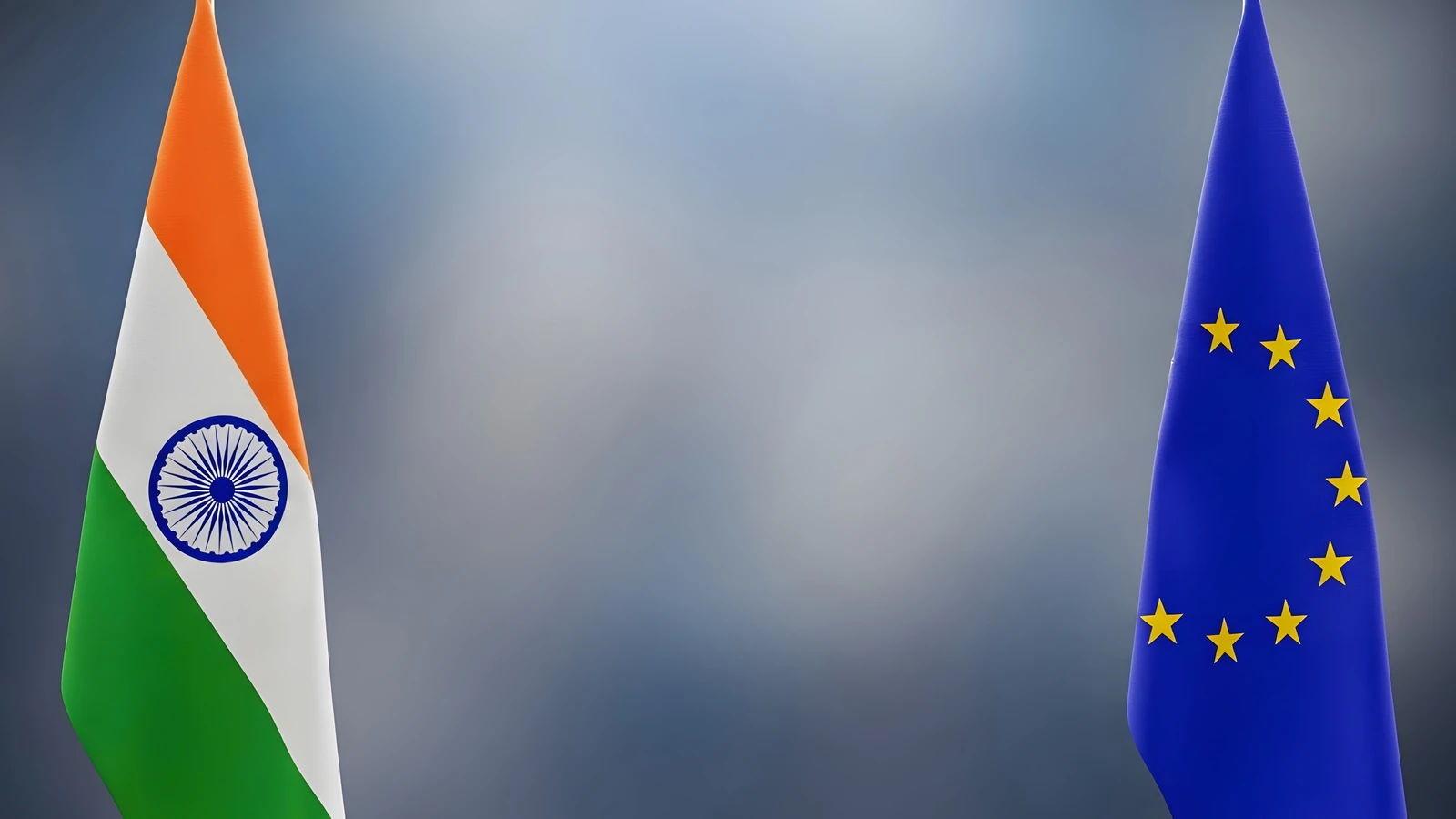
High-Level Discussions Held in Brussels as Negotiations Enter Crucial Phase
India and the European Union on Friday held detailed discussions in Brussels on the proposed Free Trade Agreement, reaffirming their commitment to a rules-based trading framework and a modern economic partnership that protects the interests of farmers and micro, small and medium enterprises.Ministerial Engagements Focus on Mutually Beneficial Trade Pact
Commerce and Industry Minister Piyush Goyal is on a two-day official visit to the EU headquarters, where he held high-level talks with EU Trade and Economic Security Commissioner Maros Sefcovic to advance negotiations on the long-pending agreement.During the dialogue, both sides reviewed key areas of the proposed pact and reiterated their intention to build a modern economic partnership that integrates Indian industries into global supply chains while safeguarding sensitive domestic sectors.
Talks Build on Recent Senior-Level Deliberations
The ministerial discussions followed a week of intensive engagements in Brussels, building on groundwork laid earlier this week during meetings between India’s Commerce Secretary Rajesh Agrawal and the European Commission’s Director General for Trade Sabine Weyand.These negotiations assume added significance as both sides aim to conclude the talks at the earliest, ahead of the upcoming India-EU Summit scheduled for January 27. Senior EU leadership is also expected to attend India’s Republic Day celebrations on January 26.
Negotiations Reach Most Challenging Stage
Negotiations between India and the 27-nation EU bloc have entered their most challenging phase, with both sides working to bridge differences across sensitive sectors. So far, 16 rounds of negotiations have been completed.India is seeking zero-duty market access for labour-intensive sectors such as textiles and leather, while the EU is pressing for substantial tariff reductions in automobiles, medical devices, wine, spirits, meat, and poultry, along with commitments on intellectual property protections.
Background and Trade Significance
India and the EU resumed negotiations in June 2022 for a comprehensive free trade agreement, an investment protection pact, and an agreement on geographical indications, after talks were stalled in 2013 due to differences over market access.In 2024–25, bilateral trade in goods between India and the EU stood at USD 136.53 billion, with Indian exports valued at USD 75.85 billion and imports at USD 60.68 billion, making the EU India’s largest trading partner for goods.
The EU accounts for around 17 percent of India’s total exports, while exports to India represent about 9 percent of the bloc’s overseas shipments.
Sectors Poised to Benefit
Indian exports such as ready-made garments, pharmaceuticals, steel, petroleum products, and electrical machinery are expected to gain competitiveness in the EU market if the trade pact is finalised.The negotiations span 23 chapters, covering areas including trade in goods and services, investment, trade remedies, rules of origin, customs and trade facilitation, competition policy, government procurement, dispute settlement mechanisms, intellectual property rights, geographical indications, and sustainable development.
Disclaimer: Due care and diligence have been taken in compiling and presenting news and market-related content. However, errors or omissions may arise despite such efforts.
The information provided is for general informational purposes only and does not constitute investment advice, a recommendation, or an offer to buy or sell any securities. Readers are advised to rely on their own assessment and judgment and consult appropriate financial advisers, if required, before taking any investment-related decisions.