
Incident Occurs After Flight Returns Due to Airspace Closure
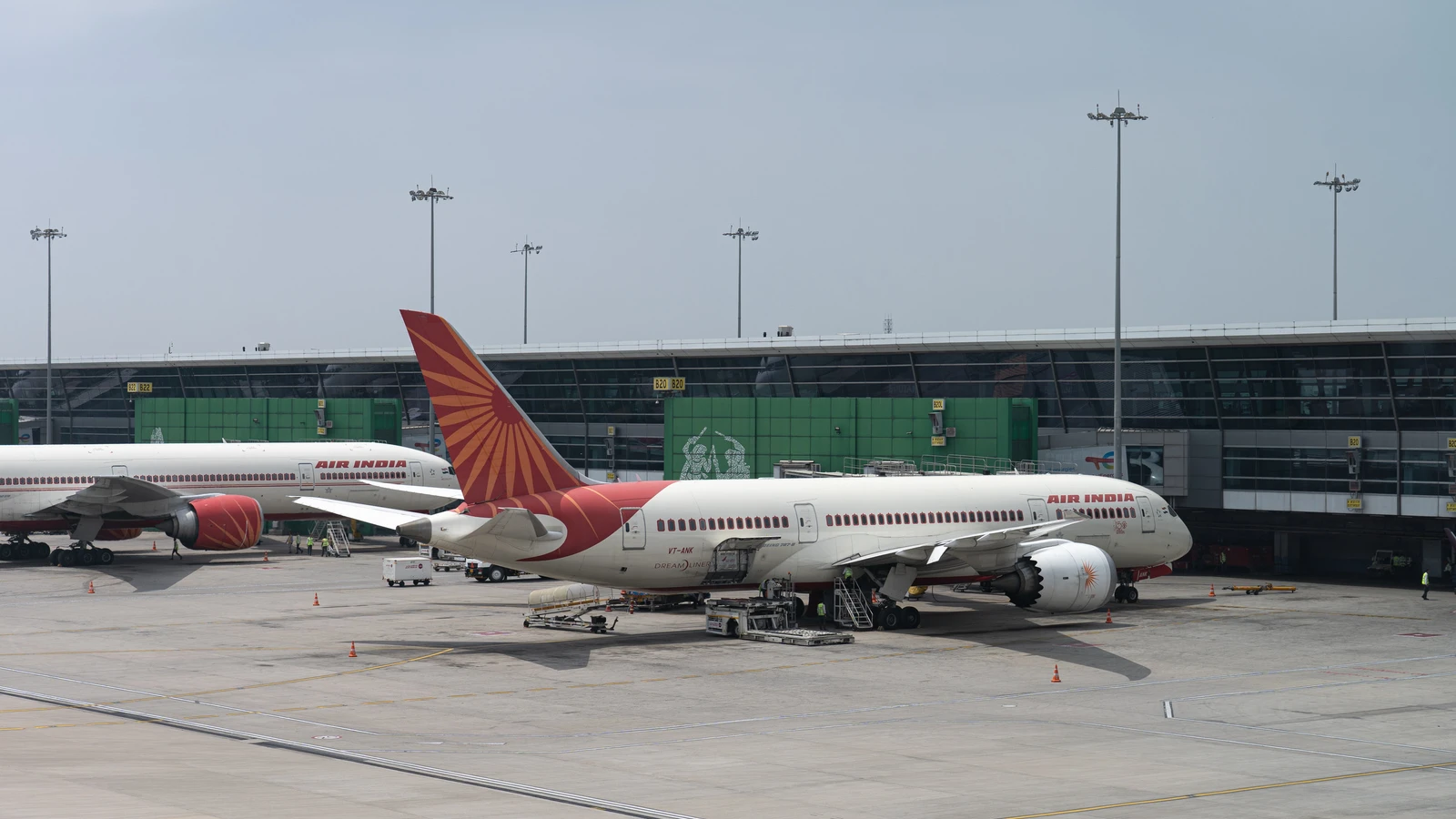
Air India’s newest Airbus A350 aircraft sustained damage to its right engine at Delhi airport after ingesting a baggage container while taxiing to its parking bay. The incident involved Flight AI101, which was operating a Delhi to New York service with more than 250 passengers on board.The aircraft had returned to Delhi shortly after take-off following the unexpected closure of Iranian airspace, which disrupted its planned westbound route. The aircraft landed safely, and no injuries were reported.
Engine Damage During Taxiing in Dense Fog
The incident occurred while the aircraft was taxiing in dense fog conditions towards its designated parking bay. During this phase, the right engine ingested a foreign object, later identified as an improperly secured baggage container. Unverified images and videos circulating online showed visible damage to the engine cowling and internal components.Engine ingestion refers to situations where a jet engine draws in foreign objects such as debris or equipment instead of clean air, often leading to significant mechanical damage.
Preliminary Findings Point to Ground Handling Lapse
According to information from the preliminary probe, a tug transporting baggage containers to the baggage makeup area crossed a taxiway intersection near the apron. During the movement, one container toppled onto the taxiway after a wheel of the dolly reportedly came off. While the operator moved away with the remaining equipment upon noticing the aircraft taxiing, the fallen container was left behind and was subsequently ingested by the aircraft’s No. 2 engine.After debris clearance, the aircraft was parked at its designated stand.
Aircraft Grounded, Fleet Pressure Increases
The affected Airbus A350 has been grounded for detailed inspection and repairs. This has added pressure on Air India’s widebody fleet availability, with one of the airline’s six A350 aircraft already out of service. The airline indicated that there could be potential disruptions on select long-haul routes operated using the A350 aircraft.Air India Confirms Safety of Passengers and Crew
Air India confirmed that the aircraft was safely positioned after the incident and that the safety of all passengers and crew was maintained throughout. The airline stated that it is assisting affected passengers with alternative travel arrangements or refunds based on their preferences.Flight Path and Wider Impact of Airspace Closure
Flight-tracking data showed that the aircraft departed Delhi at 2:36 a.m. and was cruising over Ahmedabad airspace when the Iranian airspace closure came into effect, blocking the planned overflight route. With no viable alternative routing at that stage, the flight crew decided to return to Delhi as a precautionary measure.Following the airspace shutdown, Air India also cancelled two other services, including Delhi to Newark and Mumbai to New York.
Iranian airspace is a key transit corridor for long-haul flights between South Asia, Europe, and North America due to its shorter and more fuel-efficient routing. The temporary closure forced airlines to consider longer detours, increasing flight times, operational complexity, and costs.
Investigation Underway
An investigation has been initiated to determine how the foreign object came to be on the taxiway and to examine the sequence of events leading to the engine damage. The aircraft’s right engine is reported to have suffered substantial damage and will undergo detailed technical assessment before being cleared for service.Disclaimer: Due care and diligence have been taken in compiling and presenting news and market-related content. However, errors or omissions may arise despite such efforts.
The information provided is for general informational purposes only and does not constitute investment advice, a recommendation, or an offer to buy or sell any securities. Readers are advised to rely on their own assessment and judgment and consult appropriate financial advisers, if required, before taking any investment-related decisions.