
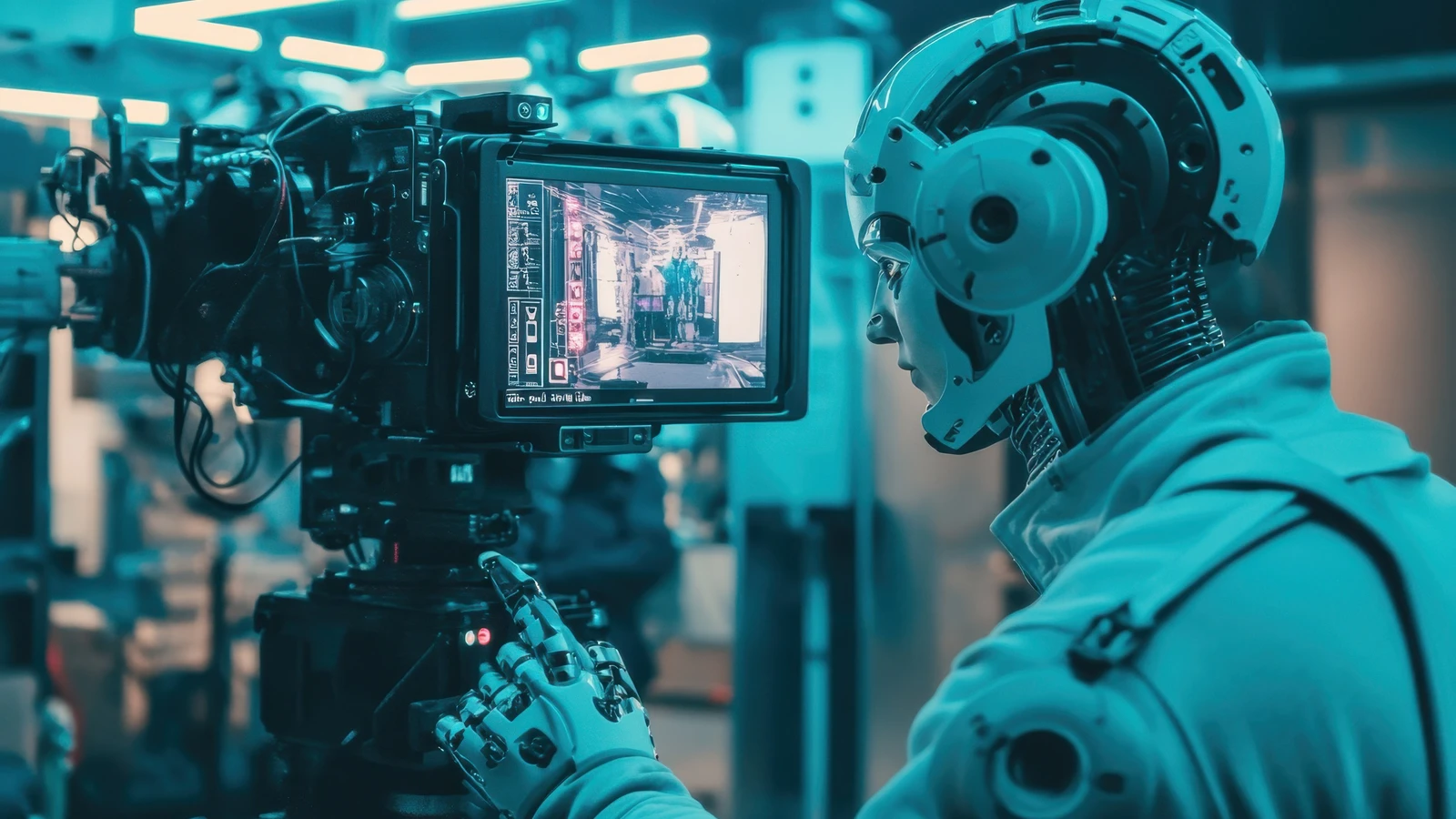
Artificial Intelligence is steadily reshaping the fundamentals of filmmaking, enabling creators to visualize entire cinematic worlds even before production begins. Speaking at the AI Impact Expo 2026 in New Delhi on Monday, actor Rana Daggubati highlighted how AI is redefining large scale storytelling and creative execution.
AI Enables Filmmakers to Preview Films Before Shooting
Addressing a session titled ‘AI x Creativity: Skilling for Innovation in the Intelligent Economy’ on the opening day of the five day summit, Daggubati said that AI tools now allow filmmakers to effectively watch their movies before a single frame is shot.Scenes that previously existed only in imagination or rough storyboards can now be visualized in detail. Entire worlds can be constructed, action sequences choreographed, and complex scenes mapped out long before cameras start rolling. According to him, this shift significantly reduces uncertainty in large budget productions and sharpens creative decision making.
“In the visual effects world, earlier, getting a shot done used to take three to five days. Now that has come down to just two to three hours. Besides, a filmmaker can now watch his movie even before shooting really begins,” he said.
The Emerging Divide: AI Builders vs AI Users
While acknowledging the growing accessibility of AI tools, Daggubati drew a distinction between creators who merely use AI and those who build intellectual property on top of it.He said the next major divide in the entertainment industry will not be between those who adopt AI and those who resist it, but between those who create proprietary IP using AI platforms and those who simply operate the tools.
“The idea of repeatability is gone now, and a key differentiating factor would be between those creating IP on AI tools and those just using it,” he noted.
He also stated that ownership dynamics in the industry are evolving. Earlier, major studios were the primary developers of large scale intellectual properties and cinematic universes. Today, independent directors have access to tools that allow them to build expansive worlds on their own.
Human Skills Remain Irreplaceable in the AI Era
Despite the rapid technological advancements, Daggubati stressed that certain core human capabilities cannot be substituted by artificial intelligence.He identified storytelling, understanding of cultural context, and social literacy as enduring skills that remain essential in filmmaking. According to him, although the industry is undergoing extreme transformation, not every aspect of cinema will become fully automated.
“We might be in the phase of extreme change, but will everything go AI from here? Not really. There are pieces of the puzzle being taken away,” he said.
Creative Education Must Adapt to AI Integration
Echoing similar views, Ashish Kulkarni, founder of Punnaryug Artvision, said foundational creative skills will continue to be critical in the AI driven economy.He noted that AI is providing valuable support in pre production and pre visualization processes. However, educational frameworks must continue to emphasize storytelling enhancement along with emotional and behavioral intelligence.
During the session, a Memorandum of Understanding was exchanged between Adobe and Nasscomm under the Future Skills Prime initiative. The discussion was moderated by Mala Sharma, Global Vice President and General Manager at Adobe, and attended by Abhilasha Gaur, CEO IT ITeS SSC Nasscomm; Saransh Agrawal, Vice President Learning and Development at Cognizant; and Raj Rishi Singh, Chief Business Officer and Chief Marketing Officer at MakeMyTrip.
AI Impact Expo 2026 Sees Massive Participation
The AI Impact Expo 2026, being held in the national capital from February 16 to 20, is expected to attract more than 2.5 lakh visitors, including international delegates. The event aims to promote global collaboration, foster new partnerships, and create business opportunities within the expanding AI ecosystem.As discussions at the summit indicate, artificial intelligence is no longer confined to back end automation. It is increasingly influencing creative industries, with filmmaking emerging as one of the most visibly transformed sectors.
Disclaimer: Due care and diligence have been taken in compiling and presenting news and market-related content. However, errors or omissions may arise despite such efforts.
The information provided is for general informational purposes only and does not constitute investment advice, a recommendation, or an offer to buy or sell any securities. Readers are advised to rely on their own assessment and judgment and consult appropriate financial advisers, if required, before taking any investment-related decisions.
Any views, opinions, or statements expressed, where applicable, are those of the respective analysts or experts and do not reflect the views of this website. The website has no association with such viewpoints and does not assume any responsibility for them.