
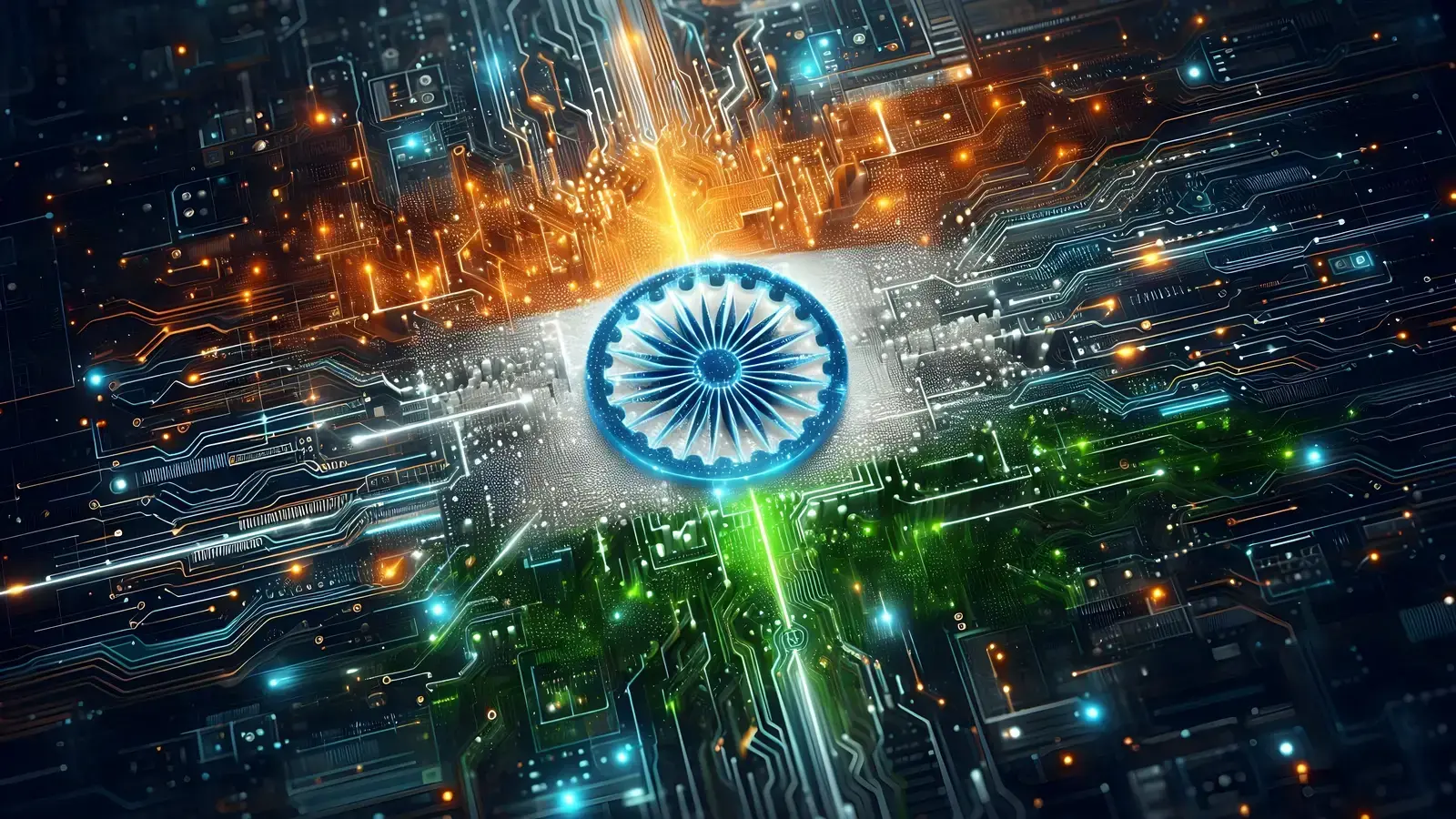
AI Impact Summit 2026 Signals India’s Strategic Push to Become a Global AI System Builder
The AI Impact Summit 2026, currently underway in New Delhi, is far more than a technology gathering. According to Pratik Mathur, Consul General of India in Shanghai, the summit represents a clear statement of India’s strategic intent to position itself among the world’s leading AI system builders.In a commentary published on China’s business portal Caixin Global, Mathur described India’s rise in artificial intelligence as a structural transformation, backed by an integrated ecosystem spanning computing, data, models, talent, governance, and real world deployment.
India’s AI Rise and Its Global Significance
Writing under the title “India's AI Rise and its Significance for the Global South: A Strategic Perspective from the Commercial Capital Shanghai,” Mathur argued that the next phase of the global AI race will not be decided solely by laboratory breakthroughs.Instead, he said, it will be shaped by nations capable of building large scale, reliable, and socially embedded AI ecosystems that combine computing power, data infrastructure, skilled talent, regulatory frameworks, and deployment at scale.
In this context, the AI Impact Summit held in Delhi from February 14 to February 16 serves as a strategic platform to project India’s ambitions internationally. India has also extended an invitation to China to participate in the summit.
From the vantage point of Eastern China, including Shanghai, Jiangsu, and Zhejiang, Mathur said the development deserves close attention. The Yangtze River Delta already operates as one of the world’s most intensive zones of digital production, integrating manufacturing, logistics, financial technology, and platform services.
However, as the global AI economy matures, the competitive frontier is shifting beyond application layer deployment toward control over computing infrastructure, foundational models, data platforms, and talent pipelines. Mathur noted that these are precisely the areas where India is making decisive moves.
India Ranks Third Globally in AI Competitiveness
Citing Stanford University’s Global AI Vibrancy Tool 2025, Mathur highlighted that India now ranks third globally in AI competitiveness, behind only the United States and China.The ranking reflects rapid gains in talent development, research output, start up formation, infrastructure expansion, and policy alignment. The AI Impact Summit 2026, he said, is designed to consolidate and project that strengthened global standing.
India’s global AI positioning, according to Mathur, is no longer aspirational but operational.
India AI Mission Anchors Full Stack Strategy
At the core of India’s AI push is the India AI Mission, approved by the cabinet with a financial outlay of over 103 billion rupees over five years.Unlike national strategies focused narrowly on research grants or pilot programs, India’s AI Mission is structured as a full stack ecosystem covering computing, data, models, skills, start ups, and governance.
A key achievement so far has been the rapid expansion of AI computing capacity. From an initial target of 10,000 graphics processing units, India has onboarded 38,000 high end GPUs. These are made available to start ups, universities, and researchers at a subsidized rate of 65 rupees per hour.
Mathur emphasized that in today’s AI economy, access to affordable computing power determines who can train models, experiment, and scale. By creating a nationally accessible GPU backbone, India is seeking to prevent AI development from being concentrated in the hands of a few large firms.
AIKosh and Large Scale Deployment Drive Inclusion
Computing infrastructure, however, is only one part of the equation. Data remains fundamental to building effective AI systems.Through AIKosh, India has developed a national platform hosting more than 5,500 datasets and 251 AI models across 20 sectors, including agriculture, healthcare, governance, and climate.
Mathur underscored that India is not piloting AI for limited users but deploying it for hundreds of millions. The country’s inclusion focused approach places broad based societal integration at the center of its AI strategy.
The roadmap for AI for Inclusive Societal Development places India’s 490 million informal workers at the heart of this transformation. Tools such as voice interfaces, real time translation, smart contracts, and micro credentials are being positioned to integrate them into the digital economy.
A Strategic Moment in the Global AI Race
The AI Impact Summit 2026 therefore marks a strategic moment in the global AI race. As competition shifts toward ecosystem building and infrastructure control, India is projecting itself not just as a technology adopter, but as a system builder shaping the next phase of artificial intelligence.Disclaimer: Due care and diligence have been taken in compiling and presenting news and market-related content. However, errors or omissions may arise despite such efforts.
The information provided is for general informational purposes only and does not constitute investment advice, a recommendation, or an offer to buy or sell any securities. Readers are advised to rely on their own assessment and judgment and consult appropriate financial advisers, if required, before taking any investment-related decisions.
Any views, opinions, or statements expressed, where applicable, are those of the respective analysts or experts and do not reflect the views of this website. The website has no association with such viewpoints and does not assume any responsibility for them.