
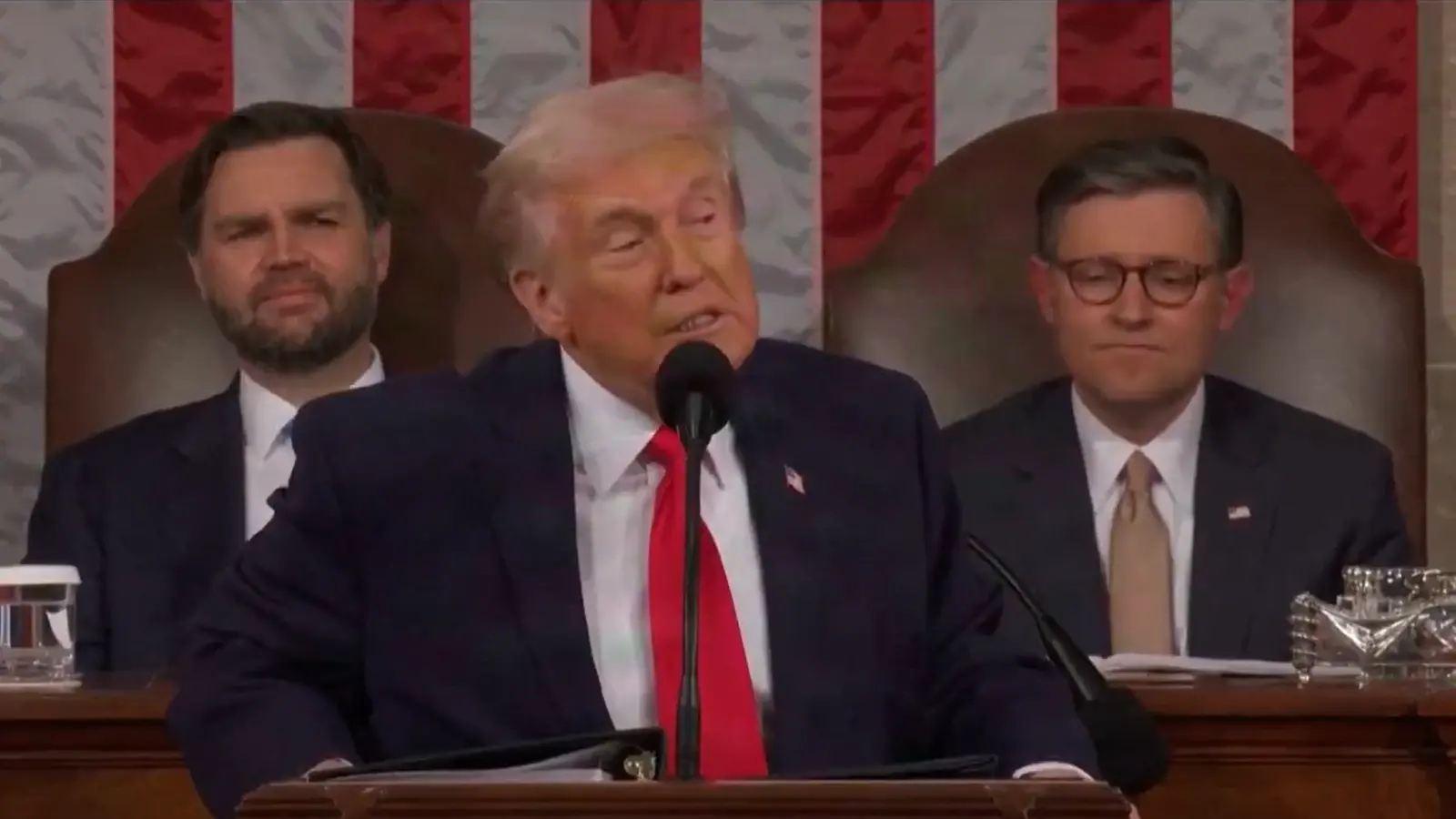
In a politically charged State of the Union address on Capitol Hill, US President Donald J. Trump laid out a series of proposals spanning retirement savings reform, tax relief measures, and a significant shift in trade and fiscal rhetoric.
The speech combined policy announcements with campaign-style pledges, placing Social Security, income taxes, and tariffs at the centre of his legislative and economic agenda.
New Federally Backed Retirement Plan for Private-Sector Workers
President Trump announced that his administration would introduce a new retirement savings option aimed at private-sector employees who do not have access to employer-sponsored retirement plans with matching contributions.Beginning next year, eligible non-governmental employees would be able to contribute to a federally backed retirement plan similar to those available to federal workers. Under the proposal, the federal government would match contributions up to $1,000 annually.
Trump described the current disparity in retirement benefits between federal workers and many private-sector employees as a “gross disparity,” framing the move as targeted support for workers with limited access to structured retirement savings vehicles.
“No Tax on Tips, Overtime and Social Security”
The president also declared that his administration had delivered what he described as a broader fiscal package that includes:- No tax on tips
- No tax on overtime
- No tax on Social Security
According to the report, the deduction:
- Is temporary and lasts through 2029
- Does not apply to lower-income seniors who already do not pay taxes on Social Security benefits
- Excludes individuals who claim benefits before age 65
- Phases out for those above specified income thresholds
Tariffs as a Potential Alternative to Income Tax
In a notable shift in tax policy rhetoric, Trump suggested that tariffs could eventually replace a significant portion of the modern income tax system.“As time goes by, I believe that tariffs paid by foreign countries will, like in the past, substantially replace the modern-day system of income tax,” he said, adding that such a move would reduce the financial burden on American households.
While outlining the idea, the president did not provide detailed calculations or a framework explaining how tariff revenues would offset existing federal income tax collections. He also did not address how potential trade retaliation or price impacts would be managed under such a system.
Economists have long debated the broader economic implications of tariffs, noting that they are typically paid by importers and may be passed on to consumers through higher prices.
Markets and Policy Signals in Focus
The address comes at a time of heightened political tensions and market sensitivity. Investors are closely monitoring signals related to trade policy, fiscal priorities, and regulatory direction.Alongside retirement and tax proposals, Trump is expected to continue emphasizing economic growth, national security, immigration, and energy policy as key pillars of his legislative roadmap.
Disclaimer: Due care and diligence have been taken in compiling and presenting news and market-related content. However, errors or omissions may arise despite such efforts.
The information provided is for general informational purposes only and does not constitute investment advice, a recommendation, or an offer to buy or sell any securities. Readers are advised to rely on their own assessment and judgment and consult appropriate financial advisers, if required, before taking any investment-related decisions.
Any views, opinions, or statements expressed, where applicable, are those of the respective analysts or experts and do not reflect the views of this website. The website has no association with such viewpoints and does not assume any responsibility for them.