
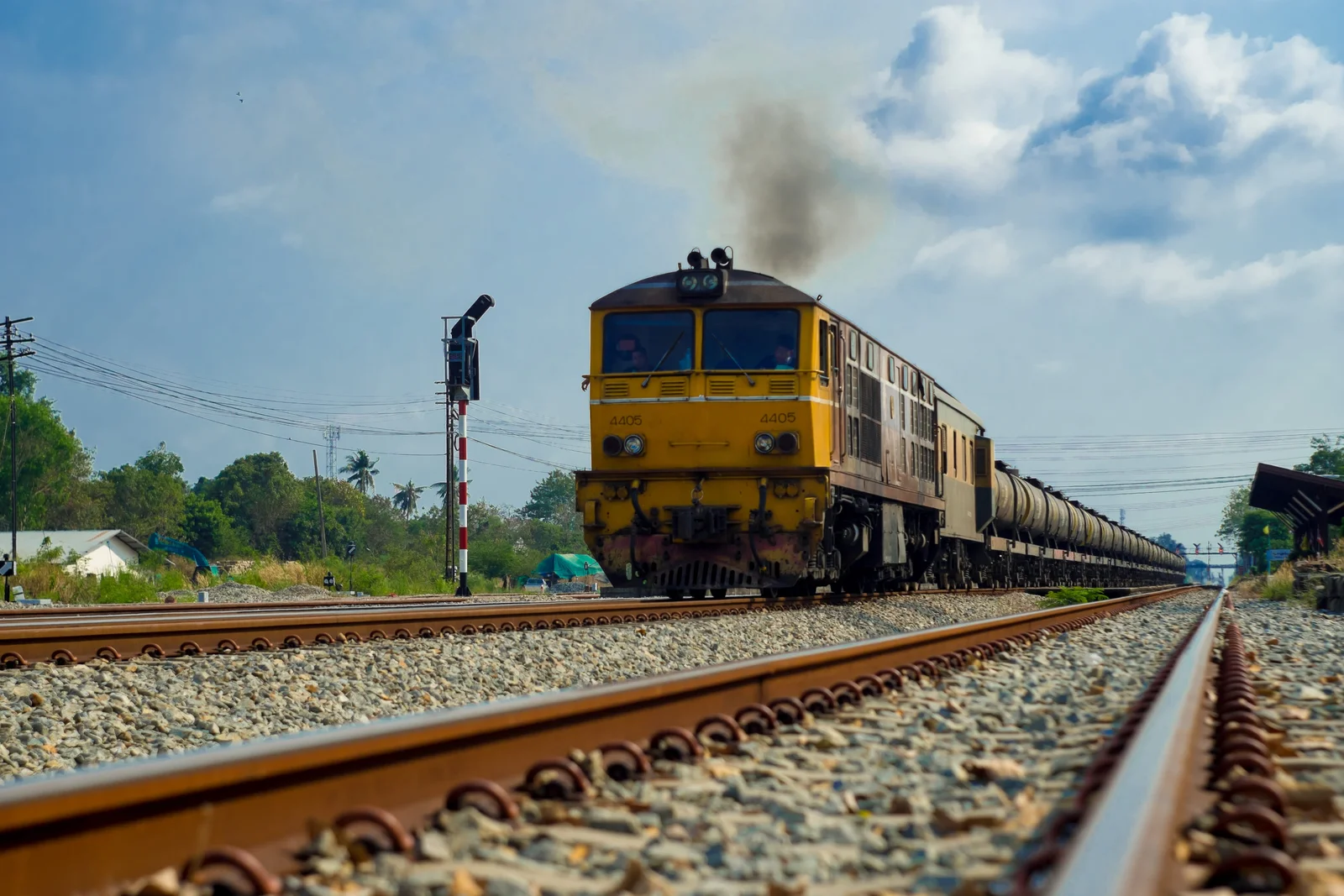
New Delhi, April 9 – Railways are set to play a key role in driving India’s economic growth as the country targets a freight capacity of 3,000 million tonnes by 2030, a report has said.
According to the ASSOCHAM-AESCLA report, railways currently account for up to 30 per cent of freight movement, indicating substantial growth potential.
It highlighted that the sector is undergoing rapid transformation, driven by initiatives such as Dedicated Freight Corridors and near-complete electrification, which are improving efficiency and sustainability.
The report pointed out the need to increase rail’s modal share through capacity expansion, further development of Dedicated Freight Corridors, greater private sector participation, and improved last-mile connectivity.
It also underlined the importance of reducing logistics costs – currently at around 7.97 per cent of GDP – to enhance India’s global competitiveness.
Dr. Surendra Kumar Ahirwar, Executive Director (Traffic Commercial), Railway Board, said that Indian Railways is undergoing accelerated transformation and evolving into a future-ready system. He noted that the railways are not only facilitating economic growth but also contributing to it through a vast manufacturing and service ecosystem.
He highlighted major drivers of this transformation, including improved safety standards, rapid capacity expansion, continuous technology upgradation, adoption of AI, and a shift towards end-to-end logistics solutions with strong first and last-mile connectivity. He also pointed to the need to reduce the cost of container production.
Ahirwar further said that Indian Railways has added nearly 31,000 km of track over the past decade, reflecting a significant pace of infrastructure expansion.
Sanjay Bajpai, Advisor, Railways Council, ASSOCHAM, said that Indian Railways is transitioning from a traditional transporter to a key driver of logistics efficiency, industrial competitiveness and economic expansion. He emphasised the need for modern terminals, improved port connectivity, and seamless multimodal integration.
He added that with freight loading already exceeding 1.6 billion tonnes annually, the sector is poised for strong growth, supported by infrastructure development, policy reforms, and digitalisation.
Disclaimer: Due care and diligence have been taken in compiling and presenting news and market-related content. However, errors or omissions may arise despite such efforts.
The information provided is for general informational purposes only and does not constitute investment advice, a recommendation, or an offer to buy or sell any securities. Readers are advised to rely on their own assessment and judgment and consult appropriate financial advisers, if required, before taking any investment-related decisions.
Any views, opinions, or statements expressed, where applicable, are those of the respective analysts or experts and do not reflect the views of this website. The website has no association with such viewpoints and does not assume any responsibility for them.