
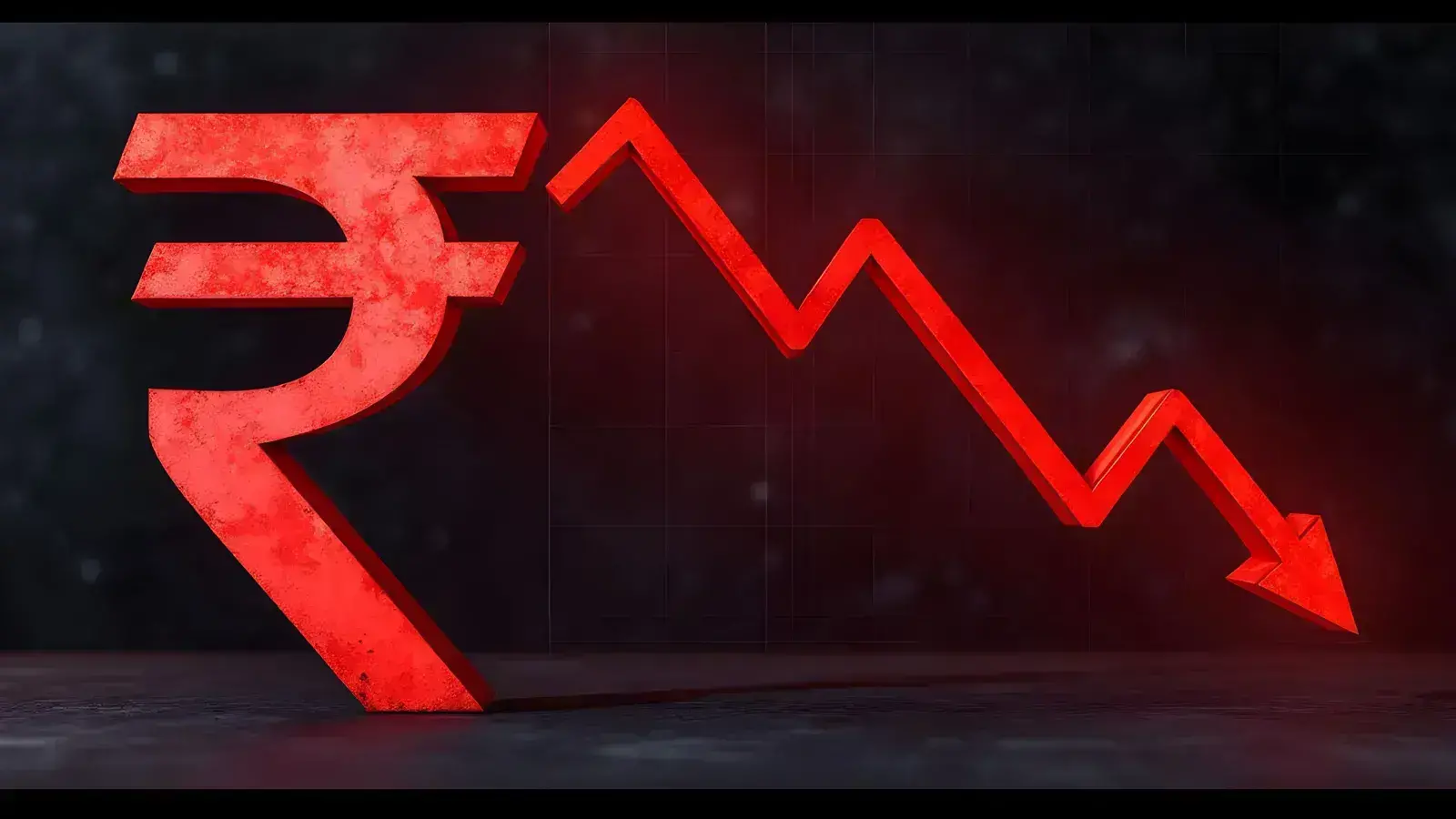
Indian Rupee Logs Sharpest Annual Fall in 14 Years, Slides 9.88% Against US Dollar in FY26
External Pressures and Capital Outflows Drive Currency Weakness
Mumbai, March 30: The Indian rupee depreciated by 9.88 per cent against the US dollar in FY26, marking its steepest annual decline in 14 years.The last comparable fall was recorded in FY12, when the domestic currency dropped 12.4 per cent amid a widening current account deficit of 4.2 per cent.
The decline in FY26 was largely attributed to persistent foreign fund outflows, elevated crude oil prices, and a strengthening US dollar. Volatility in global financial markets and tightening liquidity conditions further added pressure on the currency.
Asian Currencies Also Under Pressure
The rupee's weakness was not isolated, as several Asian currencies also depreciated against the US dollar during the same period.The Japanese Yen declined by 6 per cent, the Philippine Peso fell by 5.74 per cent, and the South Korean Won slipped by 2.88 per cent since April 1, according to market participants.
“Perfect Storm” of Global Factors Behind Decline
Sunal Sodhani, Head of Treasury at Shinhan Bank in India, described FY26 as a “perfect storm” driven by external shocks, capital outflows, and structural vulnerabilities.He noted that the drivers of depreciation in FY26 differ from those in FY12.
“Unlike FY12, which was more domestic and taper-driven, the depreciation in FY26 is externally driven by oil, geopolitics, capital flight, and amplified by India's import dependence,” Sodhani said.
Tariffs and West Asia Conflict Add to Pressure
The rupee’s initial slide in FY26 followed the imposition of US tariffs on India, which triggered a surge in demand for the dollar.The situation worsened further due to the ongoing West Asia conflict, which pushed crude oil prices significantly higher and intensified pressure on the domestic currency.
These developments also weighed on domestic equity and debt markets, resulting in sustained foreign capital outflows.
RBI Intervenes, Introduces Measures to Curb Speculation
Despite interventions by the Reserve Bank of India, the rupee continued to weaken, hitting successive record lows and touching an all-time low of 95 against the US dollar.To support the currency, the RBI sold USD 55.073 billion in the spot market till January in FY26.
In a regulatory move to curb excessive speculation, the central bank announced that banks can hold only up to USD 100 million in net open positions in the onshore currency market at the end of each trading day. This rule will come into effect from April 10 and is expected to limit large, one-sided bets against the rupee.
Volatile Trading Session Sees Partial Recovery
Following the RBI’s announcement, the rupee appreciated sharply in early trade on Monday. However, gains were largely reversed due to heavy dollar demand from oil companies.During intra-day trade, the currency breached the 95 mark but later recovered to close 7 paise higher at 94.78 against the US dollar.
Forex traders noted significant volatility in the USD/INR pair, which swung 165 paise during the session as the West Asia crisis entered its 31st day.
Market participants cited factors such as corporate dollar buying, position adjustments in the non-deliverable forward market, and purchases by nationalised banks and oil companies as reasons for the pullback.
Outlook: Range-Bound but Volatile Movement Expected
Experts indicated that the rupee is likely to trade within a broad range of 92 to 97 against the US dollar.“The outlook depends on three variables: oil, flows, and global rates. The new normal is higher volatility along with gradual depreciation, rather than stability within a fixed band. In FY27, the USD/INR pair is expected to remain within the 92-97 range,” Sodhani added.
Disclaimer: Due care and diligence have been taken in compiling and presenting news and market-related content. However, errors or omissions may arise despite such efforts.
The information provided is for general informational purposes only and does not constitute investment advice, a recommendation, or an offer to buy or sell any securities. Readers are advised to rely on their own assessment and judgment and consult appropriate financial advisers, if required, before taking any investment-related decisions.