
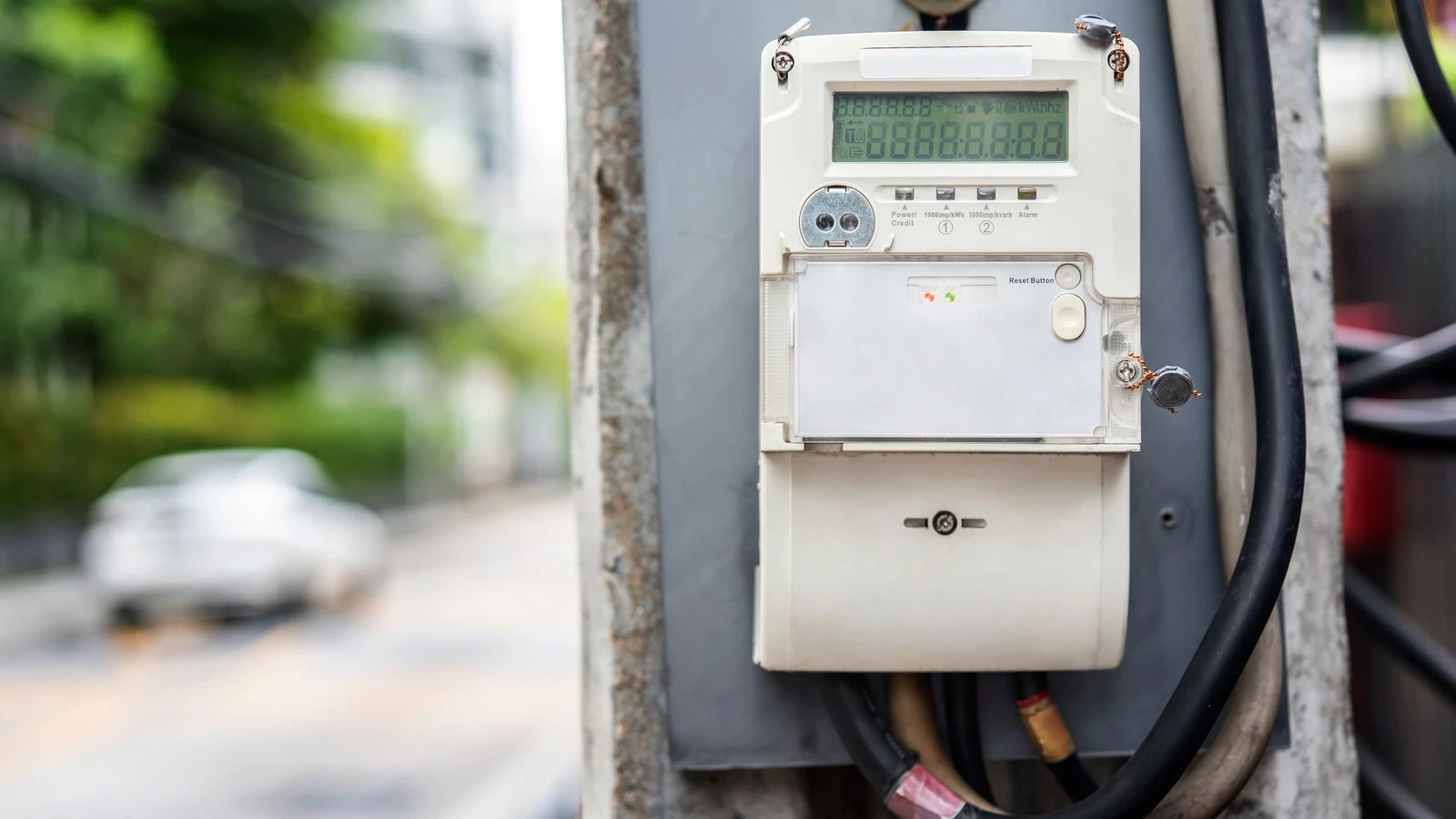
5.5 Crore Smart Meters Installed Under ₹3.03 Lakh Crore RDSS
New Delhi, February 24: India has installed nearly 5.5 crore smart electricity meters under the Revamped Distribution Sector Scheme, marking a significant milestone in the country’s push to digitize power distribution and modernize DISCOM operations.Union Minister Shripad Yesso Naik said the large-scale rollout is part of a broader reform strategy aimed at improving operational efficiency and financial sustainability across distribution companies.
Launched in 2023, the Revamped Distribution Sector Scheme carries an outlay of Rs 3,03,758 crore for a five-year period from FY 2021-22 to FY 2025-26. The scheme focuses on reducing Aggregate Technical and Commercial losses, eliminating the gap between average cost of supply and average revenue realized, and strengthening the financial position of DISCOMs.
Under the initiative, the Ministry plans to install a total of 20 crore smart meters across the country.
Smart Meters to Enable Real-Time Energy Accounting and Accurate Billing
Smart metering has emerged as one of the most transformative elements of the reform agenda. According to the minister, smart meters facilitate real-time energy accounting, accurate billing, improved revenue realization, and greater consumer empowerment.They also generate high-resolution data, forming the backbone of digital intelligence in the power sector. With granular consumption data available at scale, utilities can enhance transparency, streamline operations, and improve service delivery.
AI to Play Central Role in Managing Dynamic Power Load Patterns
Highlighting the growing importance of Artificial Intelligence in the energy ecosystem, the minister said the power sector is poised to become one of the biggest beneficiaries of the technological shift.He emphasized the need for increased adoption of technology, including AI, to address evolving power load patterns. As rooftop solar installations under PM Surya Ghar expand, electric vehicle charging networks grow, and Battery Energy Storage Systems scale up, electricity demand is expected to become more dynamic and decentralized.
In such a scenario, traditional planning approaches will no longer be sufficient.
AI-Driven Analytics to Strengthen Grid Reliability and Financial Health
With millions of smart meters generating detailed consumption data, AI can be leveraged for both short-term and long-term demand forecasting. It can also support feeder-level and transformer-level load prediction, real-time demand response management, dynamic load balancing, predictive maintenance, and outage prevention.AI-driven analytics will enable DISCOMs to forecast demand peaks more accurately, reduce expensive power purchases during peak hours, incentivize off-peak consumption, and optimize procurement through power exchanges.
These measures are expected to reduce financial stress while enhancing grid reliability and operational efficiency.
According to the minister, the integration of smart meters with AI capabilities will help transform DISCOMs from reactive service providers into predictive and intelligent network managers.
Vision for a Next-Generation DISCOM
The minister outlined that the next-generation DISCOM must be financially disciplined, digitally integrated, consumer-centric, renewable-ready, and operationally efficient.He noted that India’s progress toward Viksit Bharat 2047 is closely linked to building a modern and resilient power distribution sector. Industry stakeholders, technology innovators, and financial institutions were urged to actively participate in the transformation process.
The push for smart metering and AI integration signals a structural shift in India’s electricity distribution landscape, aligning digital transformation with financial reform and long-term energy sustainability.
Disclaimer: Due care and diligence have been taken in compiling and presenting news and market-related content. However, errors or omissions may arise despite such efforts.
The information provided is for general informational purposes only and does not constitute investment advice, a recommendation, or an offer to buy or sell any securities. Readers are advised to rely on their own assessment and judgment and consult appropriate financial advisers, if required, before taking any investment-related decisions.