
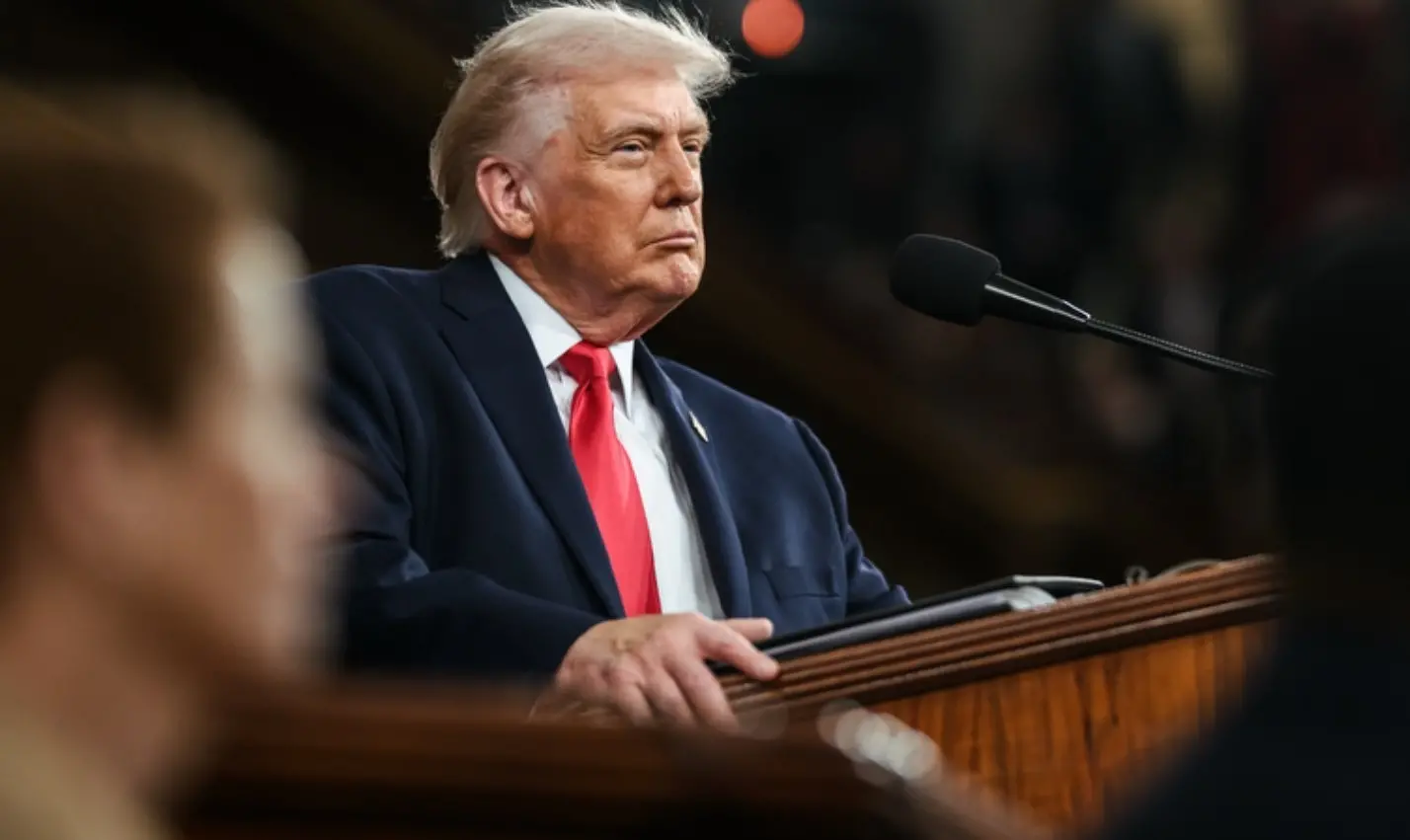
Donald Trump’s 2026 State of the Union: War Claims, AI Energy Concerns, and Insider Trading Ban Take Center Stage
In his 2026 State of the Union address, US President Donald Trump returned to familiar themes of national security, economic protectionism, and voter integrity, while introducing new policy proposals aimed at addressing public concerns over artificial intelligence and rising living costs.The address, delivered ahead of the November midterm elections, placed affordability at the heart of the administration’s messaging, as persistent inflation and ongoing international conflicts continue to weigh on public sentiment.
Trump Repeats Claim of Preventing Eight Wars
During the speech, President Trump repeated his assertion that he had prevented eight wars. Among the examples cited was Operation Sindoor, which India launched in May 2025 targeting terrorist camps in Pakistan.India has consistently denied any role by the United States in facilitating the subsequent ceasefire, maintaining that the developments were independent of American intervention. Despite these denials, Trump reiterated the claim before Congress, framing it as part of his broader foreign policy achievements.
“Rate Payer Protection Pledge” Targets AI Energy Consumption
A major policy announcement in the speech was the introduction of the “Rate Payer Protection Pledge,” a new initiative aimed at addressing growing public concerns over the electricity demands of AI data centers.AI data centers require substantial amounts of power, and critics have linked their rapid expansion to increased utility bills for consumers. The proposed measure is positioned as a safeguard to ensure that ordinary ratepayers do not bear the cost burden associated with the surge in artificial intelligence infrastructure.
Trump presented the pledge as part of a broader effort to balance technological advancement with consumer protection.
Safe America Act and Voting Integrity
The President also urged Congress to pass the Safe America Act, which he said would prevent illegal immigrants from voting.Federal law already prohibits non citizens from voting in federal elections, and most states require some form of identification at polling stations. Nonetheless, Trump argued that additional legislative measures were necessary to reinforce election integrity and public confidence in the voting system.
Tariff Impact Claims Challenged by Study
On trade policy, Trump maintained that exporters had absorbed the bulk of the costs arising from his tariff measures.However, a recent study by the New York Federal Reserve indicated otherwise. According to the findings, American consumers bore 94 percent of the tariff related costs between January and August 2025. By November, that figure had declined to 86 percent, suggesting that US households continued to shoulder a significant portion of the financial impact.
The data directly contrasted with the President’s characterization of the tariff burden.
Crackdown on Corruption and Insider Trading Proposal
Vice President JD Vance’s anti corruption drive was another highlight of the speech. Trump said the administration’s crackdown on corruption has been in effect for four months.In a notable moment that drew applause from members of the opposition, Trump called on Congress to pass legislation banning insider trading. The proposal received visible support from rival Democrats, signaling potential bipartisan traction on the issue.
Affordability Dominates Political Narrative
Affordability emerged as the central theme of the 2026 State of the Union address. With inflation persisting and international conflicts contributing to economic uncertainty, the administration faces mounting political pressure.Recent polls have shown that rising costs have negatively affected Trump’s approval ratings as the country heads toward the midterm elections in November. By foregrounding energy costs, election integrity, trade policy, and anti corruption measures, the President sought to reassure voters that economic relief remains a top priority.
As the midterm campaign season intensifies, the policy proposals outlined in the address are likely to shape legislative debates and voter perceptions in the months ahead.
Disclaimer: Due care and diligence have been taken in compiling and presenting news and market-related content. However, errors or omissions may arise despite such efforts.
The information provided is for general informational purposes only and does not constitute investment advice, a recommendation, or an offer to buy or sell any securities. Readers are advised to rely on their own assessment and judgment and consult appropriate financial advisers, if required, before taking any investment-related decisions.
Any views, opinions, or statements expressed, where applicable, are those of the respective analysts or experts and do not reflect the views of this website. The website has no association with such viewpoints and does not assume any responsibility for them.