
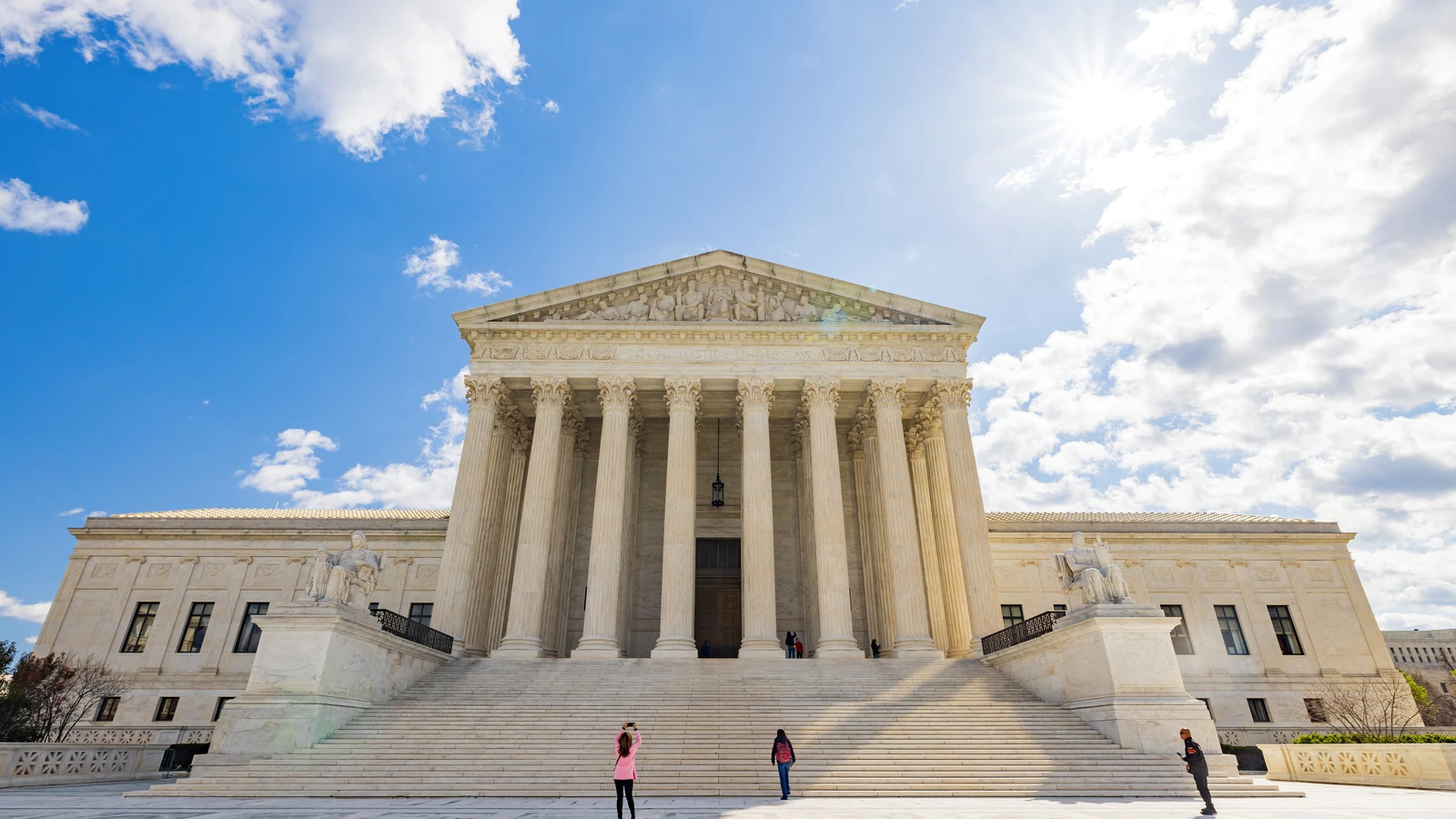
US Supreme Court Ruling Reshapes Tariff Landscape
New Delhi, February 23: Indian exports to the United States will be subject to an additional 10 percent tariff for 150 days starting February 24, following a ruling by the US Supreme Court that invalidated President Donald Trump’s earlier tariff measures.The decision comes after the court ruled last week that the sweeping tariffs imposed under the International Emergency Economic Powers Act of 1977 were illegal, stating that the president had exceeded his authority.
In response to the ruling, President Trump announced a 10 percent tariff on imports from all countries, including India, effective February 24 for a period of 150 days. However, within hours of this announcement, he also declared that the tariff would be raised to 15 percent, though no official order has yet been issued to that effect.
Exporters Seek Clarity Amid Policy Uncertainty
Ajay Sahai, Director General of the Federation of Indian Export Organisations, said exporters are awaiting formal confirmation regarding the proposed 15 percent rate.“According to the current order, Indian goods will face a 10 percent tariff from February 24. However, we are waiting for clarification, as a 15 percent tariff order has not yet been issued by the US. But there is uncertainty,” he said.
There is also confusion over what will happen after the 150-day period ends, leaving exporters uncertain about long-term pricing and supply commitments.
Sharad Kumar Saraf, founder chairman of Technocraft Industries India, said resolving the tariff issue is essential for restoring business confidence.
“The US is a key export destination for Indian exporters, and the uncertainty surrounding import duties impacts business sentiment. Clarity and certainty regarding these tariffs will help us boost exports to the US,” he noted.
How the 10% Tariff Impacts Effective Duty
The additional 10 percent tariff will be imposed over and above existing Most Favoured Nation import duties in the US.For example, if a product currently attracts a 5 percent MFN duty, the new 10 percent levy will raise the effective duty to 15 percent. Earlier, the calculation would have been 5 percent plus 25 percent. If the 15 percent tariff is formally implemented, the effective duty would become 5 percent plus 15 percent.
Sectoral Impact: Footwear, Leather and Seafood
Aqeel Panaruna, Chairman of Florence shoe company, said the Supreme Court’s ruling has improved visibility for global footwear and leather sourcing, with effective duties expected to remain in the 10 to 15 percent range.He said the ruling applies uniformly across Asian sourcing countries, helping restore predictability for US brands.
“For the footwear and leather industry, which is one of the most labour-intensive and service-driven global manufacturing sectors, tariff stability is critical. Long product development cycles, tight margins, and complex supplier coordination require predictable landed costs and reliable execution,” he said.
He added that India remains a competitive sourcing destination due to its large and skilled workforce, expanding manufacturing capacity, and ability to meet US buyers’ requirements on quality and delivery timelines.
“Footwear manufacturing is no longer solely driven by cost. Service reliability, workforce continuity, and long-term supplier relationships are increasingly central to sourcing decisions. India’s ability to provide consistent labour availability and scalable production helps reduce supply-chain risk for US brands,” he noted.
Yogesh Gupta, Managing Director of Kolkata-based Megaa Moda, a processor and exporter of seafood products, said the reduction in reciprocal tariffs to 10 percent could help increase shipments to the American market.
He added that removal of uncertainty around the 15 percent rate would provide clearer guidance to exporters.
Background: From 50% Tariffs to Interim Trade Framework
The US had imposed a 25 percent reciprocal tariff on India in August 2025. Subsequently, an additional 25 percent duty was levied over India’s purchase of Russian crude oil, taking the total tariffs to 50 percent.Under an interim framework for a bilateral trade agreement, the US had agreed to reduce tariffs to 18 percent. So far, the initial 25 percent tariff has been removed, while the remaining 25 percent continues to apply.
To move forward, the agreed framework must be converted into a legal document before signing and implementing the first phase of the trade agreement. An Indian delegation was scheduled to meet US counterparts in Washington from February 23 to 26, 2026, to finalise the legal text. However, the visit has now been postponed.
US Remains India’s Largest Trading Partner
During 2021 to 2025, the US remained India’s largest trading partner in goods. The US accounts for around 18 percent of India’s total exports, 6.22 percent of its imports, and 10.73 percent of total bilateral trade.In 2024 to 2025, bilateral trade between India and the US stood at USD 186 billion, including USD 86.5 billion in exports and USD 45.3 billion in imports.
As exporters await formal clarification on whether the tariff will remain at 10 percent or rise to 15 percent, businesses across sectors are closely monitoring developments that could reshape India US trade flows in the coming months.
Disclaimer: Due care and diligence have been taken in compiling and presenting news and market-related content. However, errors or omissions may arise despite such efforts.
The information provided is for general informational purposes only and does not constitute investment advice, a recommendation, or an offer to buy or sell any securities. Readers are advised to rely on their own assessment and judgment and consult appropriate financial advisers, if required, before taking any investment-related decisions.
Last edited by a moderator: